 Landlord Tips
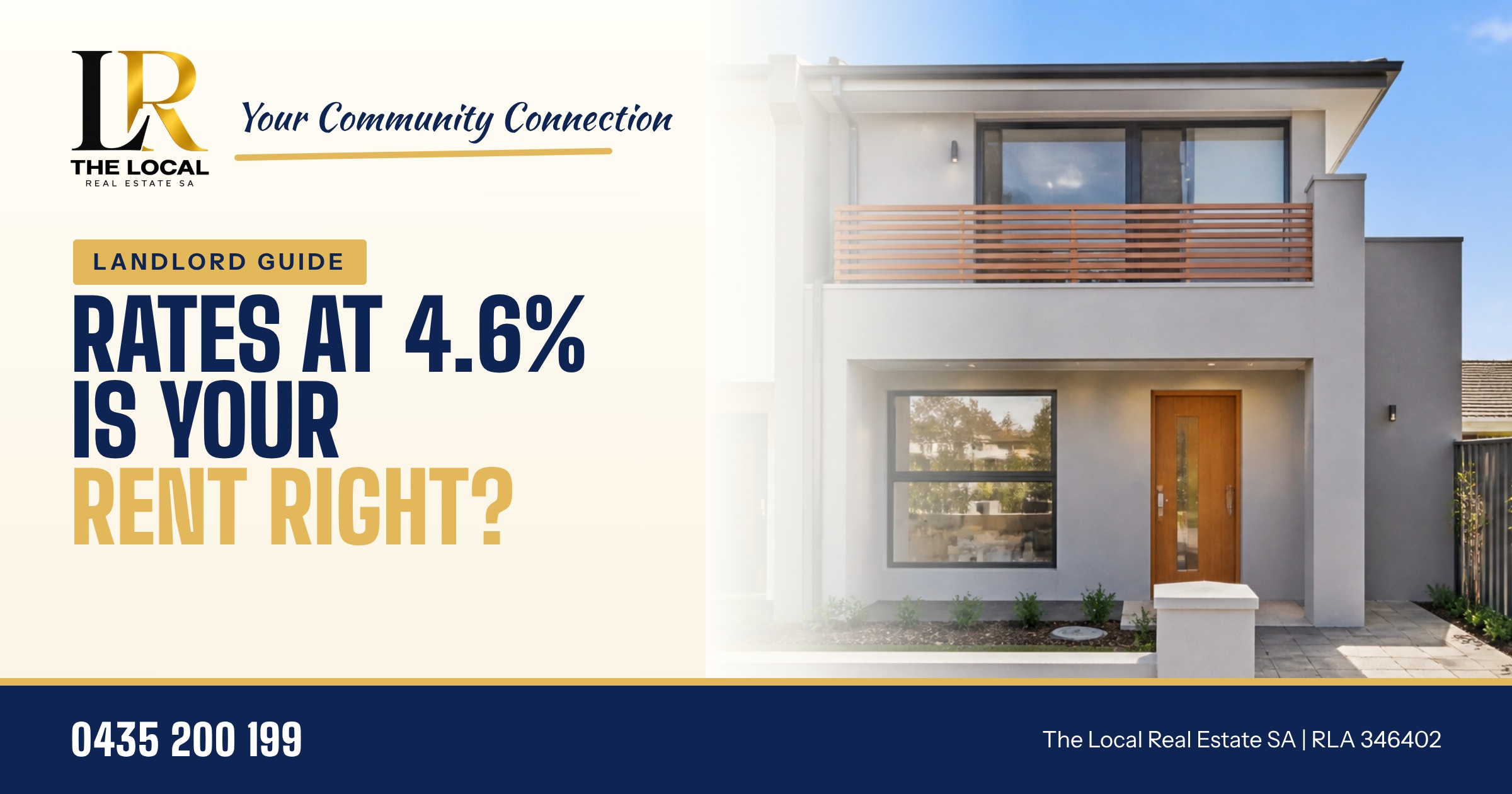
Interest Rates at 4.6%: What It Means for Your Adelaide Investment Property
29 October 2026 · Vin Sran · 6 min read
Interest rates have risen again, and for many Adelaide landlords that means higher repayments on their investment property. At the time of writing, the Reserve Bank cash rate sits at 4.6%, its highest level since 2011.
If you own a rental property, now is a good time to review your numbers. That includes your loan, your holding costs and, importantly, whether your rent still reflects today’s market. This guide explains what rate rises mean for your investment property and what you can do about it.
What do interest rate rises mean for your investment property?
- Higher repayments: on a variable investment loan, each rate rise increases your monthly repayments.
- Tighter cash flow: the gap between your rent and your costs can shrink, or a positive property can become negatively geared.
- More pressure on vacancies: every week your property sits empty costs more when your repayments are higher.
- Bigger value from good management: on-time rent, fast re-leasing and well-maintained properties matter more than ever.
Is your rent still at market rate?
Adelaide’s rental market remains tight. Mid-2026 SQM Research data showed Adelaide’s vacancy rate at around 0.7%, with asking rents up about 3.4% over the year. If your rent hasn’t been reviewed in the past 12 months, there’s a good chance it has fallen behind the market.
It’s important to remember that rent should reflect the rental market, not your mortgage repayments. A fair, market-based rent helps you keep quality tenants, while overpricing can lead to longer vacancies and higher costs.
When was your rent last reviewed? Book a free rental appraisal with The Local Real Estate SA and find out what your property could rent for in today’s market. Book your free rental appraisal or call Vin Sran on 0435 200 199.
Rent increase rules in South Australia
If a review shows your rent is below market, SA has clear rules about how and when it can be increased:
- Once every 12 months: rent can generally only be increased once 12 months have passed since the agreement started or since the last increase.
- 60 days’ written notice: you must give your tenant at least 60 days’ written notice of a rent increase.
- Fixed-term agreements: rent can only be increased during a fixed term if the agreement includes a condition allowing it and explains how the increase is calculated.
- Excessive increases can be challenged: there is no set cap on the amount, but a tenant can apply to the South Australian Civil and Administrative Tribunal (SACAT) if they believe an increase is excessive.
Getting these steps right protects you and keeps the relationship with your tenant on good terms. A professional property manager handles the notice, timing and paperwork for you.
5 ways to ease the pressure of higher rates
- Review your rent every year. A yearly, market-based review keeps your income in line with the market without big jumps that unsettle tenants.
- Ask your lender for a better rate. Many lenders will review your rate if you ask, and comparing loans with a broker could reduce your repayments.
- Avoid vacancies. Keep good tenants happy, plan renewals early and re-lease quickly if a tenant moves out.
- Stay on top of maintenance. Small repairs done early cost less than big problems later and help your property rent faster.
- Check your deductions. Interest, management fees, repairs and depreciation may be tax-deductible. Speak to your accountant about what applies to you.
Is your property manager reviewing your rent?
A good property manager should review your rent every year, track local rental demand and give you clear advice before your lease renews. If you haven’t heard from your property manager about your rent in the past 12 months, it may be costing you money.
At The Local Real Estate SA, we review rent in line with the market and SA rules, keep vacancies short and look after your property with routine inspections every 13 weeks. Our management fee is 5.5% including GST, with no lock-in contracts on standard management.
Free rental appraisal for Adelaide’s northern suburbs
The Local Real Estate SA is a boutique, locally owned agency based in Parafield Gardens. We manage rental properties across Parafield Gardens, Salisbury, Paralowie, Mawson Lakes, Elizabeth, Andrews Farm and Munno Para West.
Want to know if your rent is right? Book a free rental appraisal and find out what your property could rent for in today’s market.
Book online: thelocalrealestatesa.com.au/book-appraisal
Call Vin Sran: 0435 200 199
The Local Real Estate SA | RLA 346402
Frequently asked questions
Can I increase the rent because interest rates went up?
Rent increases in SA should reflect the rental market. You can increase rent once every 12 months with 60 days’ written notice, and tenants can challenge an increase they believe is excessive.
How often can rent be increased in South Australia?
Generally once every 12 months, counted from the start of the agreement or the last increase, with at least 60 days’ written notice.
How much notice do I need to give for a rent increase in SA?
At least 60 days’ written notice.
How do I know what my property should rent for?
A free rental appraisal compares your property with similar rentals and recent leases in your area, so you can set a fair, market-based rent.
What happens if my tenant thinks the increase is too high?
The tenant can apply to SACAT if they believe the rent is excessive. Setting rent based on genuine market evidence helps avoid disputes.
Read more: Sell or hold your Adelaide investment property before July 2027? and How to switch property managers in SA.
Disclaimer: The information in this article is general in nature only and is not professional legal, financial or tax advice. It does not take your personal circumstances into account. Please seek independent professional advice relevant to your situation before making any decision.